Lucio Valerio Barbera (www.luciobarbera.eu)
Summary of Lucio Barbera’s academic and public curriculum
Dean of the “Ludovico Quaroni” First Faculty of Architecture of Sapienza University of Rome (2003-2009); President of the Conference of Italian Deans of Faculties of Architecture (2008-2009); Founder (2006) and Director (2006-2009) of the Post graduate Diploma (one year and final Thesis) in Architecture for Archaeology, Archaeology for Architecture; director of the Department of Architectural and Urban Planning of Sapienza University (1995-2003); from 1995 Full Professor of Architectural and Urban Design at the Faculty of Architecture of Sapienza University of Rome and coordinator – up to 2003 – of the PhD program in Architectural Design Theories.
Deputy Mayor of Rome for Culture and the Historical Center (1992-93); coordinator of urban and architectural planning for the reconstruction of the Urban Centre of Naples (after the 1981 earthquake, until 1992);
In 1982 he was invited to the Venice Architecture Biennale for his projects in Islamic countries; in 2002 he returned to the Venice Biennale as coordinator of the active participation to the Biennale of three departments of the First Faculty of Architecture at Sapienza University. In 2024 was invited to show in the Venice Biennale – Italian Pavilion – his architectural design project produced in 2021 for Sapienza University called StuDanteum (in honour of Dante Alighieri), proposing a University multidisciplinary and multicultural Study Centre to be realized in every country of the world where La Sapienza University wants to be present and active.
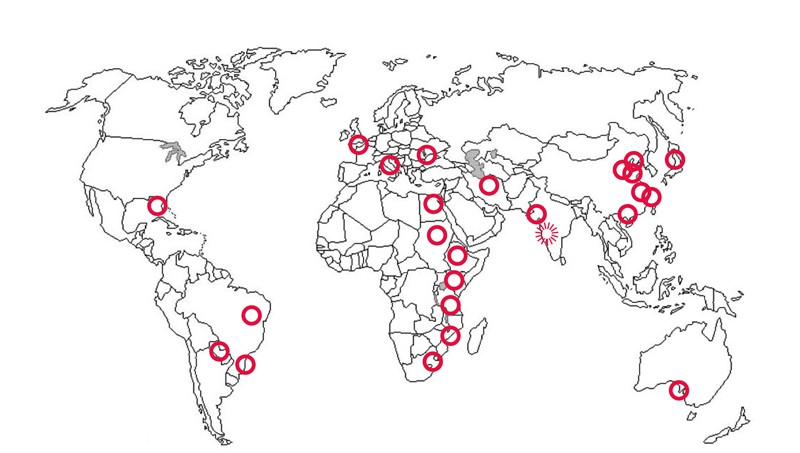
In 2009 he retired due to age limits but continued teaching in the Faculty of Architecture of Sapienza university design studios as holder of the UNESCO Chair on Sustainable Urban Quality, with particular attention to African issues. Through his academic roles he resumed and expanded his international activities in the Middle East and Africa, extending them to China and North America. The Unesco Chair is still his main academic engagement and has been newly confirmed for four years up to 2029.
____________________________
Narrative Curriculum
Lucio Barbera was born in Rome on March 28, 1937. He attended the classical high school at the Convitto Nazionale and, in 1955, enrolled in the Faculty of Architecture at Sapienza University of Rome, graduating in 1963 with highest honors (110/110). The following year he was admitted to the Register of Architects, Planners, Landscape Architects and Conservators of Rome and Province (Order no. 1662).
During his university years, he took part in the Unione Goliardica Romana (UGR) together with Marco Pannella, Paolo Ungari, Stefano Rodotà, Piero Craveri, Massimo Teodori and Gianni Mombelli. In 1956 he was elected Secretary of the Faculty Student Council and organized the occupation of the Faculty around the strongly corporative issue of preventing engineers from registering with the Architects’ Association. Although focused on this issue, the occupation—the first in postwar Italy—brought together students born between 1933 and 1938.
In 1958, together with a culturally cohesive group of fellow students, he founded the ASeA – Associazione Studenti e Architetti (Association of Students and Architects), whose founding members included L. Barbera, S. Bracco, A. Calza Bini, E. Fattinnanzi, M. La Perna, C. Maroni, G. Moneta, G. Piccinato, V. Quilici, M. Tafuri and M. Teodori. The association aimed to continue the cultural and political lines of the Modern Movement as interpreted by postwar anti-fascist criticism. In 1960, through ASeA, he helped organize the boycott against Professor Saverio Muratori’s Composition Course, an event that marked the beginning of the institutional and cultural upheavals that affected the Faculty of Architecture in Rome throughout the 1960s and culminated in the protests of 1968.
In 1961, the founders of ASeA established AUA – Architetti e Urbanisti Associati, one of the first Roman architectural practices formed by young students and recent graduates. From 1958 to 1962, while still a student, Barbera worked alongside Claudio Maroni at the Roman office of Ludovico Quaroni in Via Nizza 45. There he contributed, among other projects, to the “Conclusions” section of the Italian Pavilion at the Italia ’61 Exhibition in Turin, also assisting with artistic supervision on site. During this experience he met the young Aldo Rossi, then assistant to Marco Zanuso.
In 1963 he took part, together with A. Rossi, M. Tafuri, P. Ceccarelli, S. Dierna, C. Dardi and others, in the Urban Planning Seminar of Arezzo organized by Giancarlo De Carlo and Ludovico Quaroni. During the academic year 1963–64 he served as volunteer assistant in Ciro Cicconcelli’s Design Course; from 1964–65 onward he was volunteer assistant in Quaroni’s Architectural Composition courses, becoming tenured assistant professor under Quaroni in 1969.
In the same years, within AUA, he contributed to the design and procedural planning of the cooperative housing complex at Vigna Murata in Rome.
In 1965, together with P. Moroni (coordinator), N. Di Cagno, F. Battimelli and D. Di Virgilio, he was commissioned by the Municipality of Rome to design the Piano di Zona 167 for 25,000 inhabitants in the Spinaceto district.
After the dissolution of AUA in 1965, he formed the B.Q.Te.Mar group with V. Quilici, M. Teodori and C. Maroni. Together—excluding M. Teodori but collaborating with the studio of Luisa Anversa, who coordinated the work—they designed the Valtur tourist villages in Ostuni (Brindisi) and Isola Capo Rizzuto (Crotone) between 1966 and 1970. Both projects were built and received the 1969 IN/ARCH Award (national award for Ostuni and regional award for Isola Capo Rizzuto). In 1967 he also participated, with former AUA members, in the foundation of CoPER – Consulenze e Programmi per l’Edilizia Residenziale, contributing to preliminary studies for cooperative housing projects in Terni and Ancona.
From 1970 onward he worked in his own professional practice. Together with L. Anversa and G. Belardelli he designed the Valtur tourist village in Brucoli (Syracuse), and he was commissioned by Società Turismo 80 to design the Sheraton Hotel in Damascus, Syria, built between 1973 and 1977.
From 1971 he served as landscape design consultant and advisor for the infrastructural projects of Technital Engineering in Verona. He designed the landscape restoration of the Messina–Catania motorway, developed landscape projects for the Messina–Palermo motorway and the Val d’Astico motorway, and coordinated urban and landscape studies for the integrated development plans of the Comunità del Garda. Together with L. Belgioioso, L. Quaroni and G. Trevisan (coordinator), he studied, published and presented in Venice a “Territorial Planning Model for the Safeguard of Venice and the Rebalancing of the Veneto Region.”
In 1971 he became Professor of Architectural and Urban Design at the State Institute of Architecture in Reggio Calabria (IUSA), and in 1980 Associate Professor of Architectural and Urban Design at the Faculty of Architecture of Sapienza University of Rome. Between 1974 and 1982 he directed ProgReS – Progetti, Ricerche e Studi associated with the Technital Group. During this period he established a partnership with the studio of Sardar Afkhami in Tehran and designed the master plans of Khorramabad and Borujerd in Lorestan, Iran. In Togo, he designed the master plan for the capital city of Lomé, the territorial plan for the Maritime Region, and detailed development plans for the five district capital towns. In Libya he won the international competition and produced the Detailed Design the for the University of Sebha, comprising fourteen departments and residential facilities for 7,000 students and 1,000 faculty and staff members. In Saudi Arabia he designed and built the three main railway stations of the high-speed line between Riyadh and the Gulf. In 1982 he was invited to the Venice Architecture Biennale for his projects in Islamic countries; he returned to the Venice Biennale in 2002 as coordinator of the active participation of three departments of the “Ludovico Quaroni” Faculty of Architecture at Sapienza University.
After the 1980 earthquake, on behalf of the consortium of companies led by Edina, part of the EFIM Group, he became coordinator of the architectural and urban planning design for the “Urban Center” district of Naples. The project involved fifty-four interventions for the rehabilitation of the historic centre and nineteenth- and twentieth-century expansion districts, and continued for more than a decade.
In 1985 he was appointed by the Lazio Regional Government to coordinate the Territorial Plan and Landscape Plan for the “North Coast” sector, extending from Ostia to the Tuscan border. During the same years, for Società Gondwana of Milan, he designed a Sheraton Hotel in Karnak on the Nile River (unbuilt) and, together with Edina, won the competition for the new campus of the University of Basilicata in Potenza, which was fully realized. On behalf of Bonifica S.p.A., together with C. Giannini, he designed the new City Hall of Reggio Calabria, completed in the early 1990s, and for Isveur he developed a residential district within the Rome–Ponte di Nona complex. In collaboration with Professor A. Noli and on behalf of the consortium led by Provera e Carrassi S.p.A., he later won the competition for the design and construction of a marina at the mouth of the Fiora River (unbuilt).
In the summer of 1992, Rome’s Mayor Franco Carraro appointed him Deputy Mayor for Culture and the Historic Centre of the Municipality of Rome, a position he held until spring 1993.
He subsequently devoted himself full-time to academic life. His last major professional works concerned the design of facilities for the Italian Coast Guard system, acting as chief consultant for architectural and urban design for Itabo Servizi Tecnici – IRI. Among these projects, he directly designed the new Coast Guard headquarters in Trieste, including the Admiralty offices, and those in Marina di Carrara stand out.
In 1995 he became Full Professor of Architectural and Urban Design at the Faculty of Architecture of Sapienza University of Rome and was elected coordinator of the PhD program in Architectural Design Theories. At the same university, from 1996 to 2004, he served as Director of the DPAU – Department of Architectural and Urban Design (and its subsequent denominations). In 2003 he became Dean of the “Ludovico Quaroni” Faculty of Architecture and, in 2008, President of the Conference of Italian Deans of Faculties of Architecture.
In 2009 he retired due to age limits but continued teaching in the Faculty of Architecture of Sapienza university design studios as holder of the UNESCO Chair on Sustainable Urban Quality, with particular attention to African issues. Through his academic roles he resumed and expanded his international activities in the Middle East and Africa, extending them to China and North America. The Unesco Chair is still his main academic engagement and has been newly confirmed for four years up to 2029.
In 2024 was invited to show in the Venice Biennale – Italian Pavilion – his architectural design project produced in 2021 for Sapienza University called Studanteum, proposing a University Study Centre (in honour of Dante Alighieri) to be realized in every country of the world where La Sapienza University wants to be present and active.
He attributes much of what he achieved—not only to his academic mentors and especially to Ludovico Quaroni—but also to C. Maroni, L. Anversa, P. Moroni, M. Stevenin, G. Trevisan, C. Giannini and Lucio Ubertini. Above all, he acknowledges the many young people who worked with him, whether briefly or over longer periods, both in professional practice and at the university.

