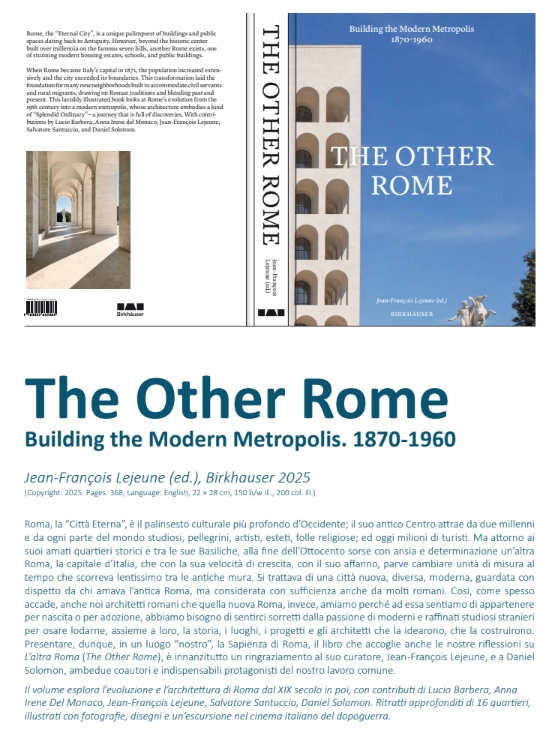
The Other Rome Building the Modern Metropolis. 1870-1960
Jean-François Lejeune (ed.), Birkhauser 2025
Roma, la “Città Eterna”, è il palinsesto culturale più profondo d’Occidente; il suo antico Centro attrae da due millenni e da ogni parte del mondo studiosi, pellegrini, artisti, esteti, folle religiose; ed oggi milioni di turisti. Ma attorno ai suoi amati quartieri storici e tra le sue Basiliche, alla fine dell’Ottocento sorse con ansia e determinazione un’altra Roma, la capitale d’Italia, che con la sua velocità di crescita, con il suo affanno, parve cambiare unità di misura al
tempo che scorreva lentissimo tra le antiche mura. Si trattava di una città nuova, diversa, moderna, guardata con dispetto da chi amava l’antica Roma, ma considerata con sufficienza anche da molti romani. Cosi, come spesso accade, anche noi architetti romani che quella nuova Roma, invece, amiamo perché ad essa sentiamo di appartenere per nascita o per adozione, abbiamo bisogno di sentirci sorretti dalla passione di moderni e raffinati studiosi stranieri per osare lodarne, assieme a loro, la storia, i luoghi, i progetti e gli architetti che la idearono, che la costruirono. Presentare, dunque, in un luogo “nostro”, la Sapienza di Roma, il libro che accoglie anche le nostre riflessioni su L’altra Roma (The Other Rome), è innanzitutto un ringraziamento al suo curatore, Jean -François Lejeune, e a Daniel Solomon, ambedue coautori e indispensabili protagonisti del nostro lavoro comune.
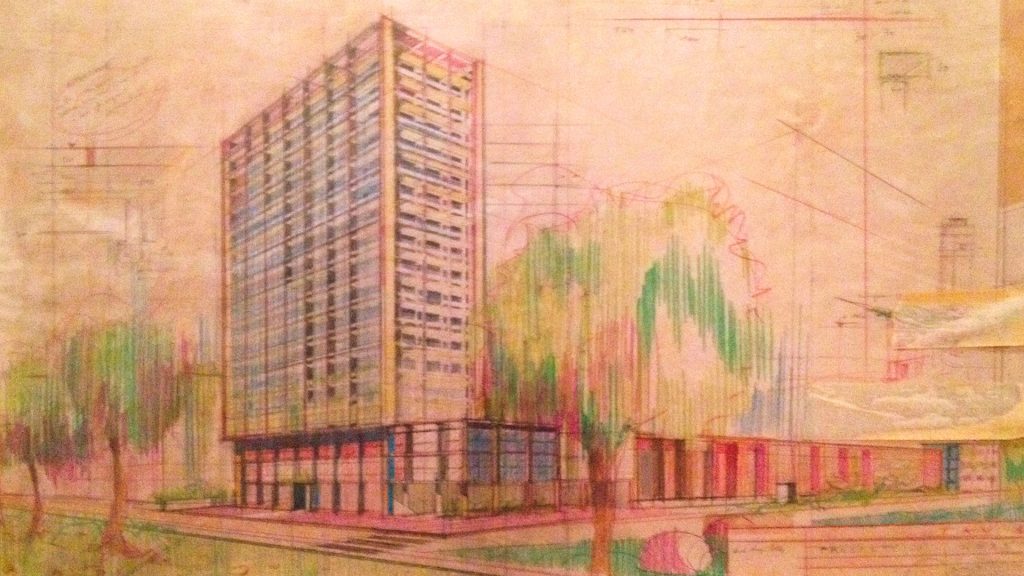
Il volume esplora l’evoluzione e l’architettura di Roma dal XIX secolo in poi, con contributi di Lucio Barbera, Anna Irene Del Monaco, Jean-François Lejeune, Salvatore Santuccio, Daniel Solomon. Ritratti approfonditi di 16 quartieri, illustrati con fotografie, disegni e un’escursione nel cinema italiano del dopoguerra.
Rome, the “Eternal City,” stands as the deepest cultural palimpsest of the West; its ancient
Centre has for two millennia drawn scholars, pilgrims, artists, aesthetes, religious
multitudes, and today, millions of tourists from every corner of the globe. Yet, around its
cherished historic quarters and nestled amidst its Basilicas, The Other Rome arose with
fervent urgency and resolve at the close of the nineteenth century: the Capital of unified
Italy. With its rapid pace of growth, with its sheer breathlessness, this new city seemed to
change the very measure of time, which had flowed so slowly within the ancient walls. It
was a city novel, distinct, and modern, viewed with disdain by those who held the old
Rome dear, and often regarded with condescension even by many Romans themselves.
Thus, as is so often the case, even we Roman architects—who nonetheless cherish that
newer Rome, feeling that we belong to it by birth or by adoption—require the buttress of
passion from modern and sophisticated foreign scholars. We need their support to dare,
alongside them, to praise the history, the places, the designs, and the architects who
conceived and constructed it.
Therefore, to present, in a place that is truly “ours”—the Faculty of Architecture at La
Sapienza—the book that incorporates our own reflections on L’altra Roma (The Other
Rome), is first and foremost an expression of gratitude to its editor, Jean-François
Lejeune, and to Daniel Solomon, both co-authors and indispensable protagonists of our
shared endeavor.
presentazione del libro
ne discutono:
Iacopo Benincampi, DSDRA Sapienza Università di Roma
Mehdi Kowsar, Professore Architetto
Franco Purini, Professore Emerito, Sapienza Università di Roma
Antonino Saggio, DIAP Sapienza Università di Roma
modera:
Anna Irene Del Monaco, PDTA Sapienza Università di Roma
AULA PICCINATO (secondo piano), Via Flaminia 70.
PDTA Dipartimento di Pianificazione Design Tecnologia dell’Architettura, Sapienza Università di Roma.
18 NOVEMBRE 2025, ORE 16.30.




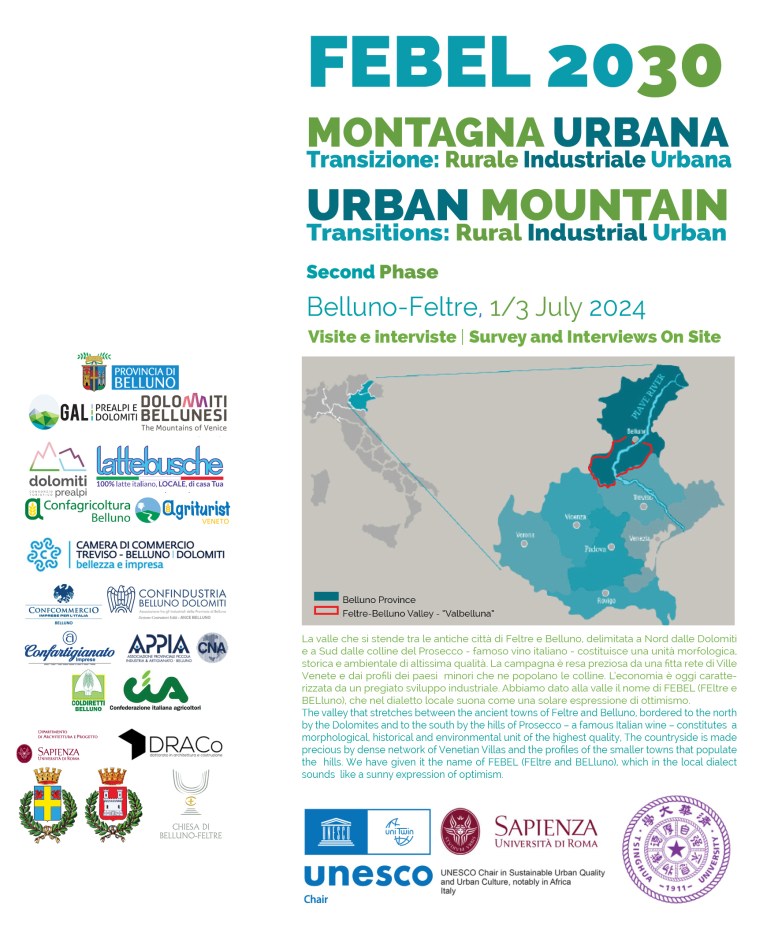
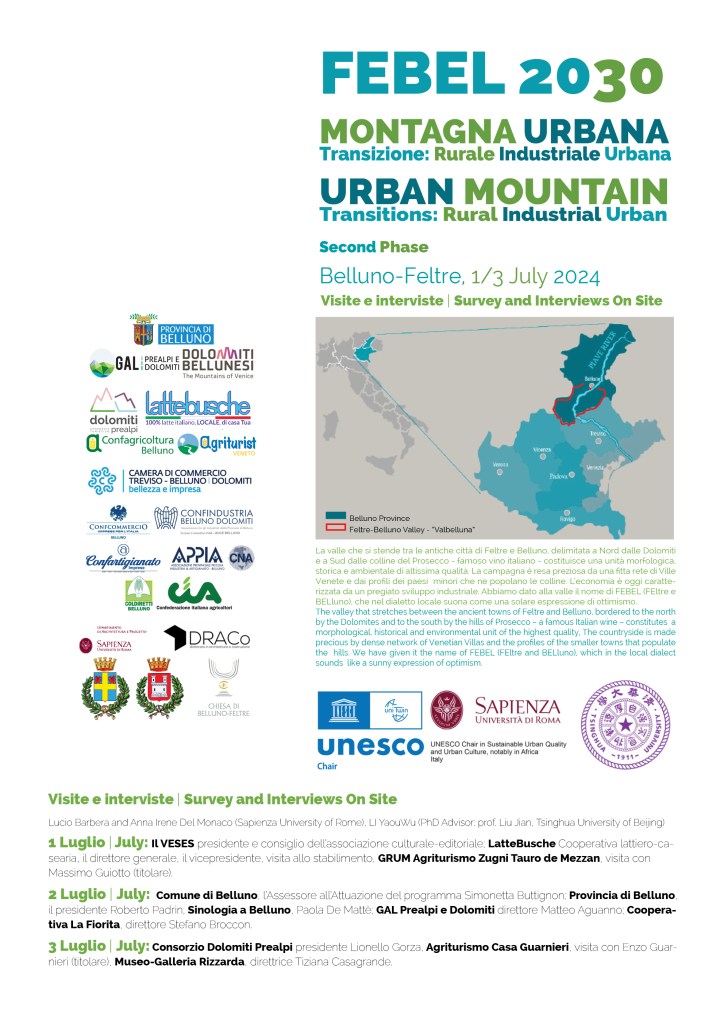








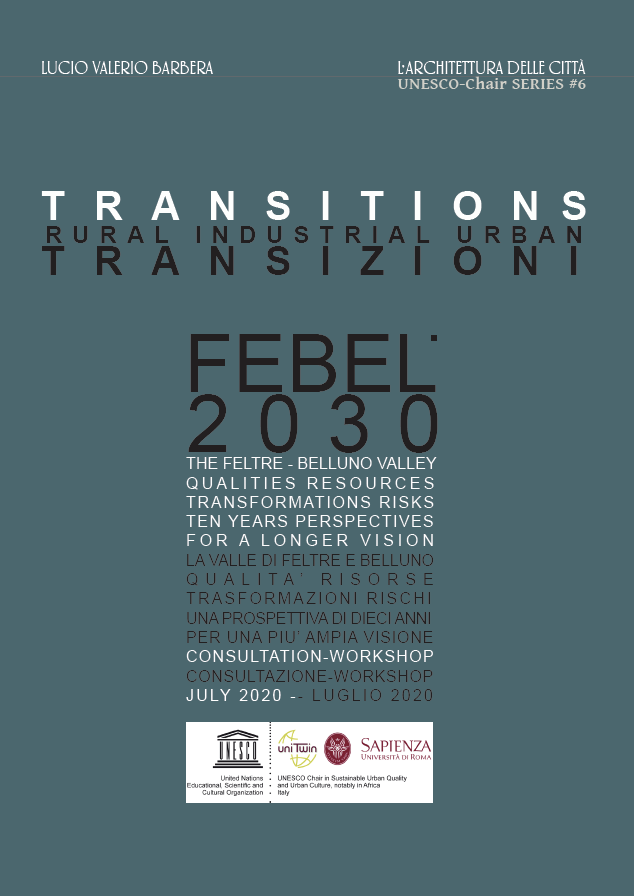 FEBEL 2030_final
 UNESCO Chair